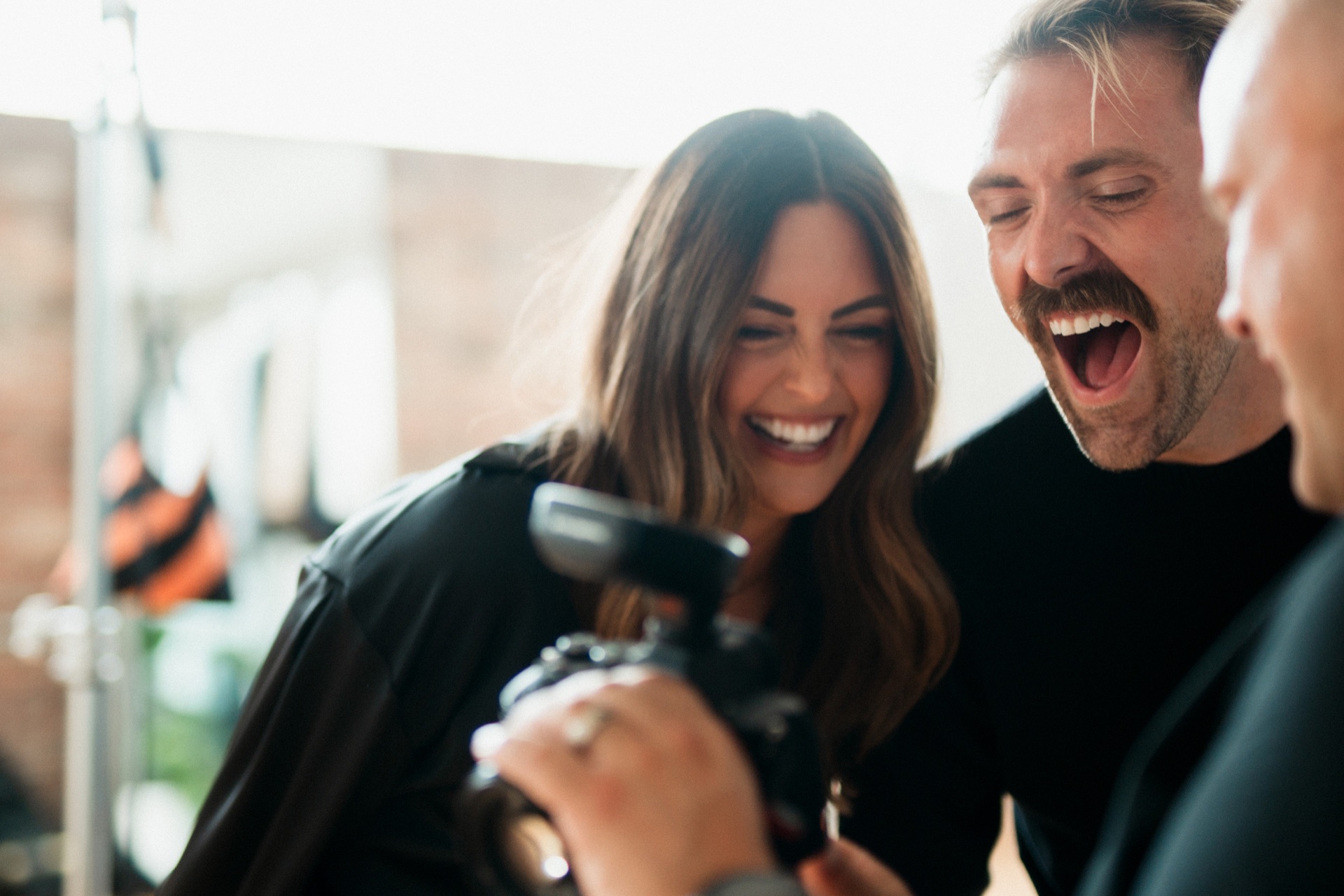
Videography helps potential customers picture what it would be like to work with you. Showing your space, your people, and the experience you offer gives them something concrete to imagine when they’re deciding who to hire or where to shop. At Studio D in Saskatoon, that’s where we start: what can we show someone that helps them see your business fitting into their life?
Show people what the experience looks like
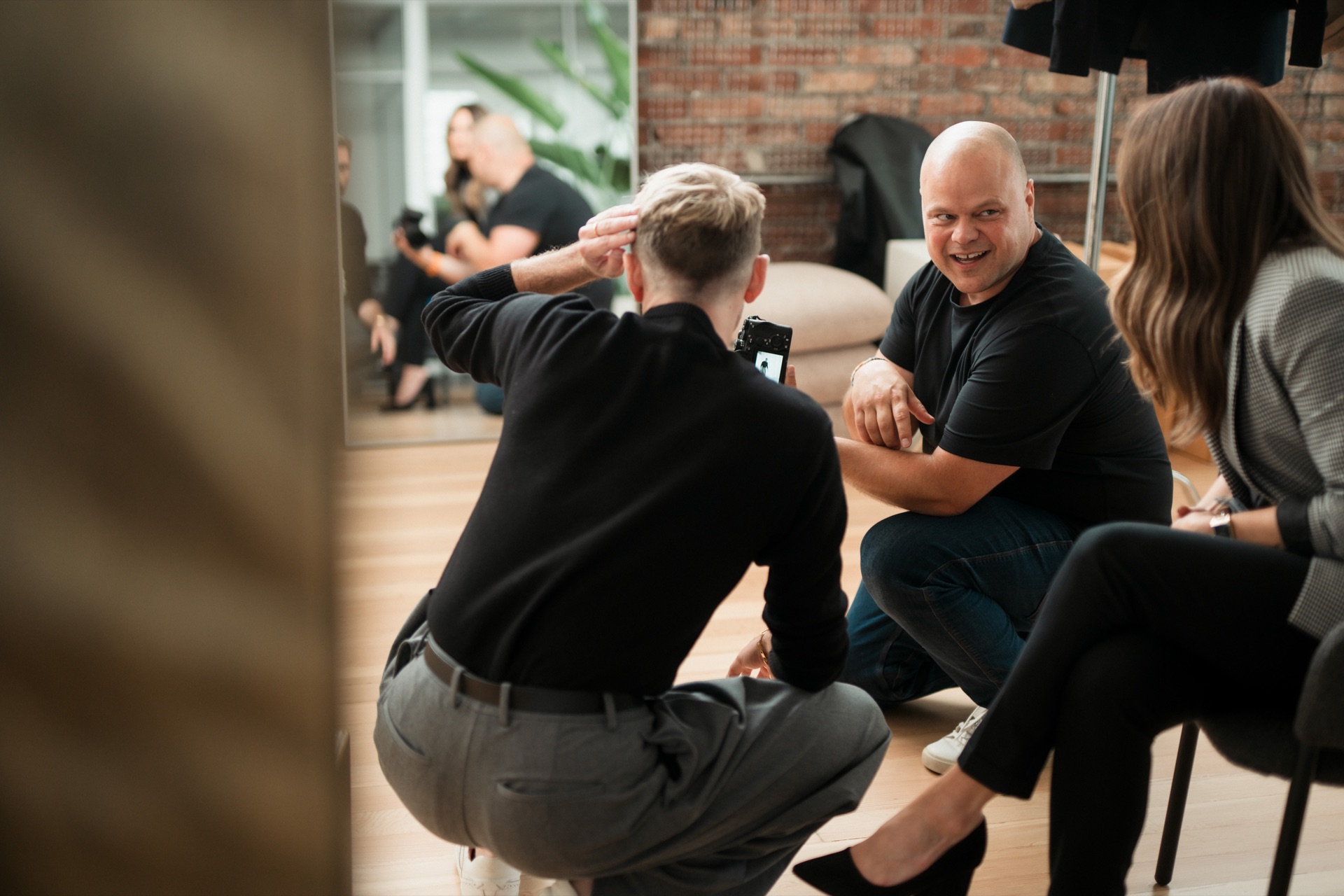
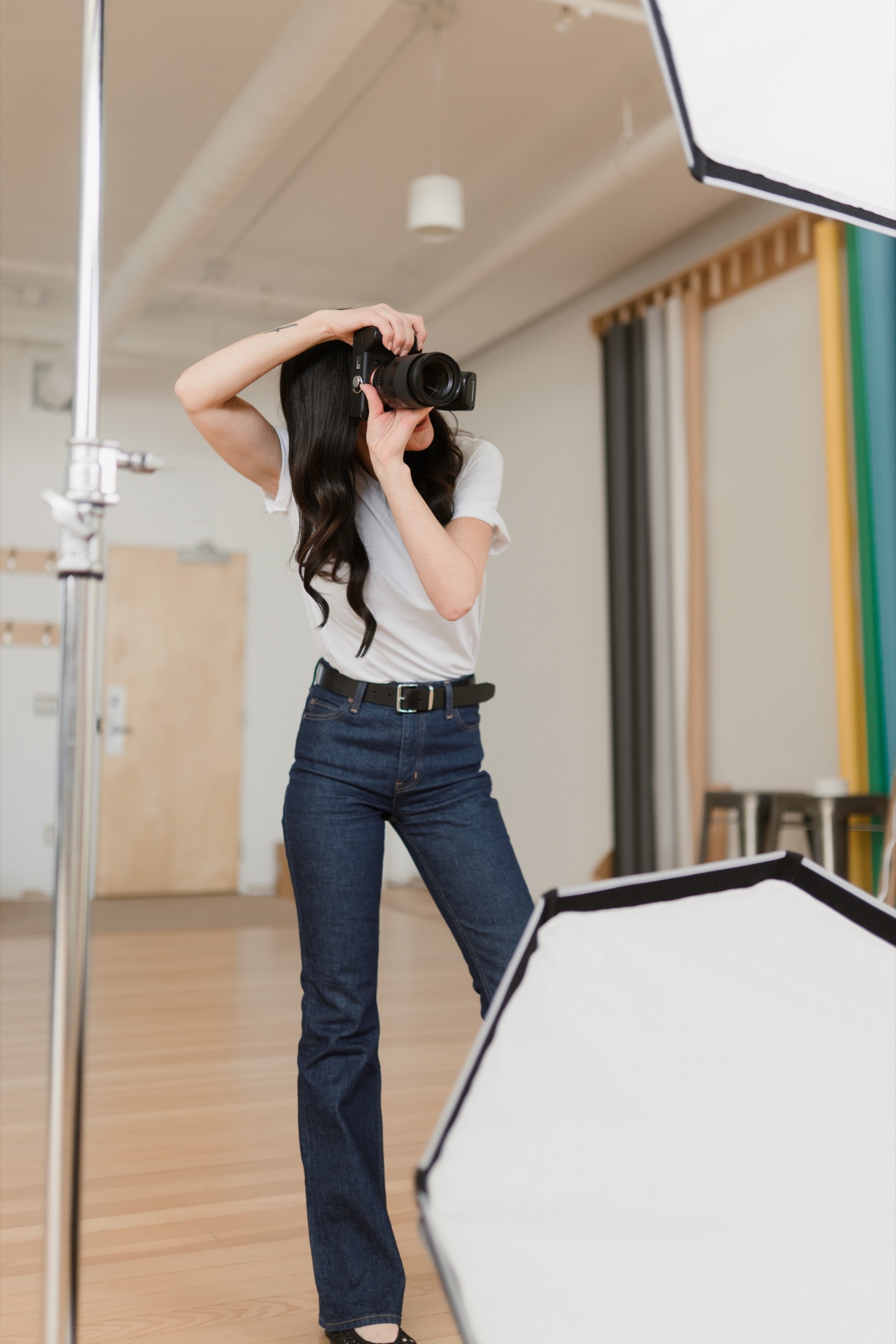
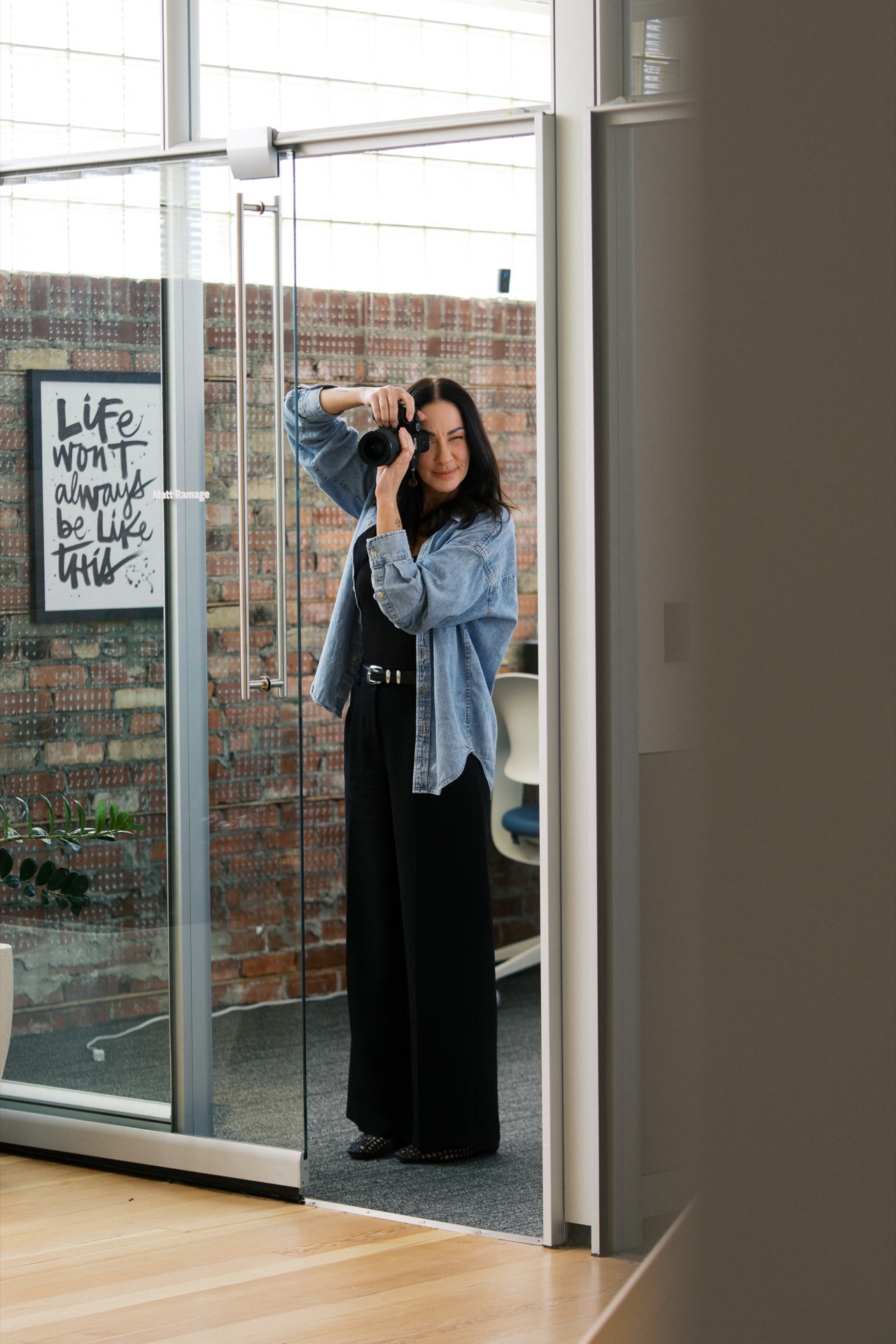
Imagine you’re thinking about getting professional portraits. You’ve seen the finished photographs, but you don’t know what happens during the session. What’s the studio like? Who will be photographing you? Will someone help you figure out what to do? A video showing someone getting portraits in our studio can answer those questions. You see the space, the interaction, and how we guide people through the session. You can start picturing yourself there.
The same idea applies to a retail store. Part of what a customer buys is the shopping experience: walking through the space, exploring the products, and getting help choosing something. A video can show that experience alongside the product being enjoyed at home. Think about everything your customer gets from you, including the service, the time together, and the finished result. Those are all things worth showing.
Start with the person who benefits
Businesses sometimes come to video with a fairly broad goal: “We need a video.” Maybe a competitor has one, or their website feels dated. Those can be good reasons to start a conversation, but you still need to decide what the video should communicate. My recommendation is to start with a client who is glad they found you. Who are they? What did they need? What changed because they worked with you?
Your company’s own story can come later. For a first video, I’d usually prioritise helping a potential customer recognise themselves in the experience of someone you’ve already helped. Be specific. Pick one person and one experience, rather than trying to describe everything you do for everyone.
Having the customer tell their own story can be powerful. You can also explain it as the business owner, supported by footage that shows the work and the experience. The important part is giving the viewer a clear picture of who benefits and how.
A Saskatoon example: helping people picture working there
One of our favourite projects was a recruitment video for a Saskatoon accounting firm. They wanted more university co-op students to accept their job offers and felt the things that made their firm a great place to work weren’t coming through. We helped identify what made the firm distinctive, then filmed employees talking about their experiences and how working there fit into their lives.
The audience was prospective employees, but the principle was the same as customer marketing: help someone picture choosing you. The firm used the video on LinkedIn and at hosted events, where it gave people something to watch and a starting point for conversation.
The client reported roughly three times as many accepted offers the following year, with a similar number of offers made. That doesn’t isolate the video’s contribution from everything else involved in recruitment, but it was an encouraging result alongside the work. They’ve continued using the video for three years. It’s a useful example of content built around a real experience, with clear places to use it.
Your first video can be simple
A good starting point is a short highlight film showing your team doing what they do. Show the interaction, the space, what a customer experiences, and what they leave with. You don’t have to fit your entire business into one video. You’re giving someone a way to understand what choosing you could look like.
With more time and budget, you can build a fuller piece around an individual customer’s experience. Let them explain what brought them to you and what working together meant for them. There’s value in creating more of those individual stories over time, as your budget allows. Each one gives another potential customer a way to recognise their own needs in your work.
Authentic branding means showing what’s really there
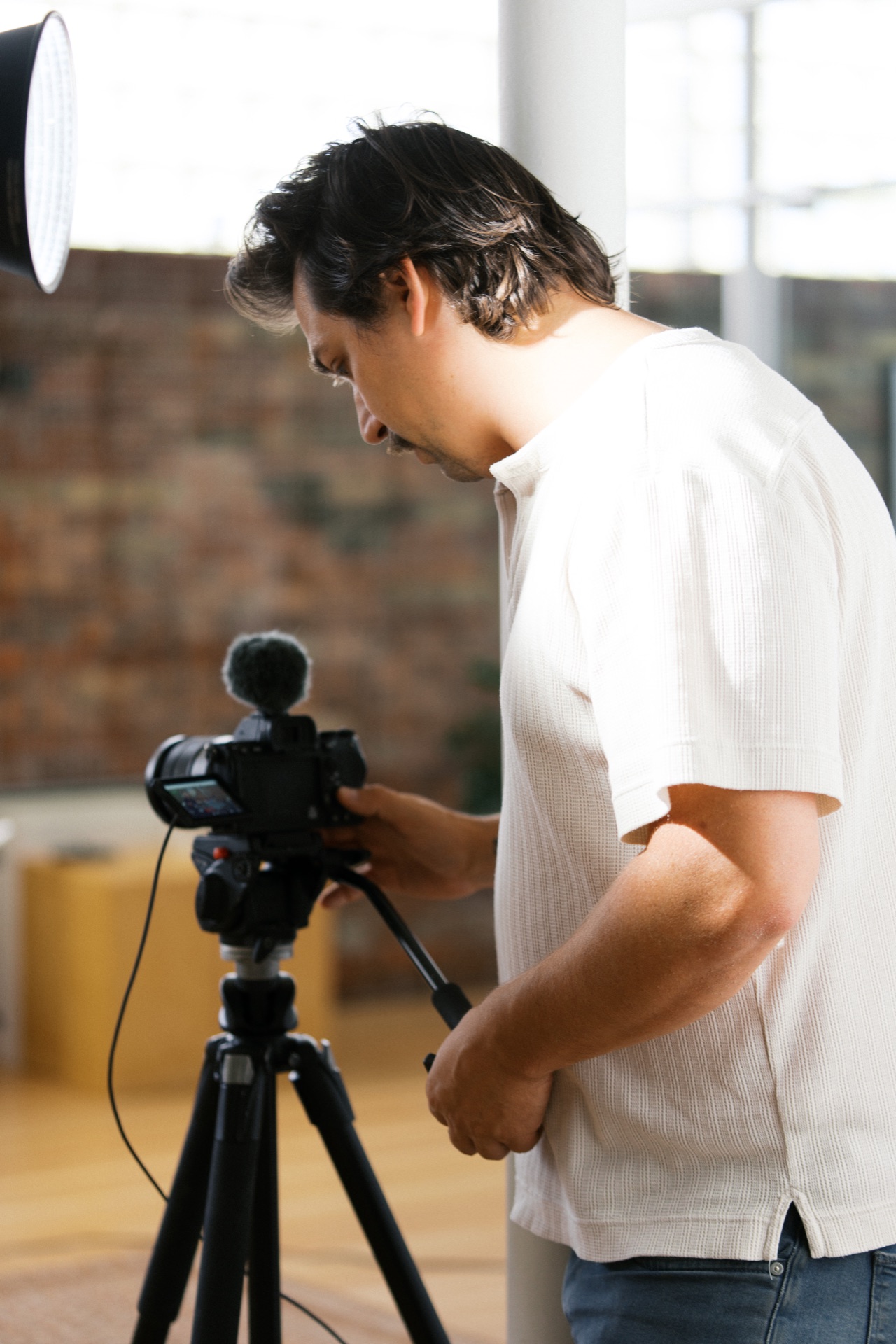
We think of authentic branding as being most you. That means showing your real team, the experience you actually deliver, and what it feels like to engage with your business. In my experience as a photographer and filmmaker, video is especially useful for capturing expression, movement, and the feeling of a space. You can hear how someone speaks, see how people interact, and watch the work happen. Photography has its own strengths, and we use both. Video gives us another way to make the experience visible.
One of my favourite things clients have told us is, “You guys just get us.” That’s what we’re aiming for: content that feels recognisable to the people inside the business and helps people outside it understand what they can expect.
Decide where the video will go before filming
Before we hit record, we should know how people are going to experience the finished video. Will it help someone understand a service on your website? Start conversations on LinkedIn? Support your sales team? Play to an audience at an event? Those decisions shape what we film, what needs to be said, and what we ask the viewer to do next.
We’ve seen this with projects built around B-roll: footage a client plans to edit and reuse themselves. That footage can be useful for lots of things, but turning it into finished content still takes work. Someone needs to choose the message, edit the sequence, add any text, and decide on a call to action. If your team needs finished pieces, plan for those from the beginning. Having footage and having content ready to publish are different stages of the job.
Before filming, get clear on who you want to reach, what you want them to understand or picture, where they’ll watch, and what they should do next. Working through those questions gives the project a purpose and helps you plan for content your team can actually use.
Start with the work you want more of
Before investing in videography, take some time to think about your brand: what you’re about, the work you want to do, and the clients you want to serve. Then choose an experience you can show that brings those things together. Who have you helped? What did working with you look like? What would you want the next person to understand about that experience?
If you’d like help turning those answers into content, we’d love to talk. At Studio D, we help businesses find what makes them distinctive and create photography and video that show it, building authentic brands our clients are proud to share.